The Allocation club type allows you to provide exclusive releases to your members. Members can log in and decide whether to participate in a release. You can create tier levels, which allow a member to move up or down depending on how much wine they wish to purchase. You can also decide which wines are available to each tier and set different quantities.
This club type integrates with your inventory in real time, ensuring that items do not oversell. In addition to letting the members decide which wines they want to purchase, they can add products to a wish list. The wish list allows the member to request additional wines for their allotment. If there are extra bottles after each allotment has been set, you, as the winery, can add additional bottles to a member’s cart based on their wishlist prior to billing.
TABLE OF CONTENTS
- Allocation Warehouse Location
- Creating an Allocation Club
- Club Options
- Allocation Club Releases
Allocation Warehouse Location
Before running an allocation, first create or designate an Allocation Warehouse. This location will be used exclusively to hold items available during an allocation release and will track inventory in real time, ensuring that a wine is not oversold.
You can create an allocation warehouse location from the Inventory Module -> Add New Warehouse. Be sure to mark it as an allocation location. You can only have one allocation inventory location.
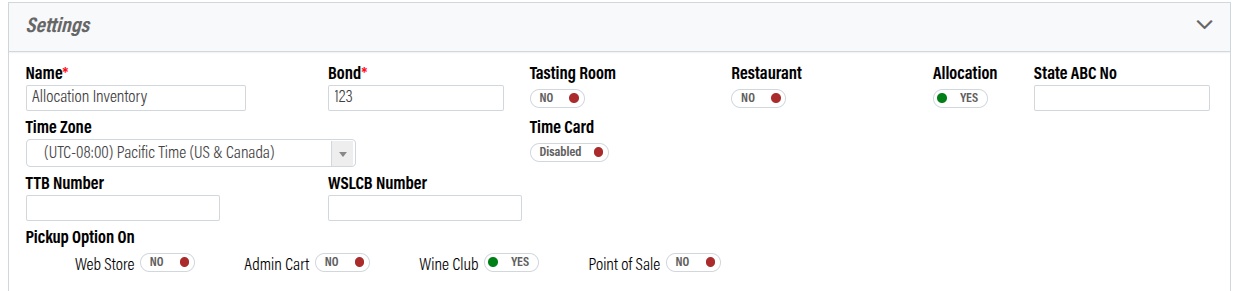
Once created, you need to transfer your allocation club inventory to this warehouse. To learn how to do this, please see the Inventory Module Quick Guide.
Creating an Allocation Club
You can create an Allocation Club from OrderPort Admin > Services > Wine Clubs Module > Wine Clubs > Create Club.
Step 1 - Select Allocation Club
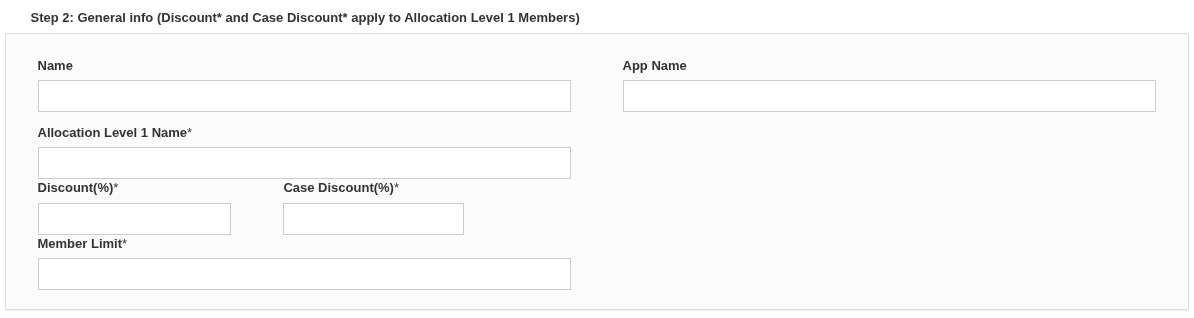
Step 2 - Name the Club and Configure Tier 1 Discounts
If you want a nickname for the club on the point of sale app, you have the option to select a unique app name.
Step 3 - Allocation Tiers
Each tier you create will be its own customer class with its own discounts. The allocation amount defines the minimum purchase requirement in a release. If you are not sure how many tiers you want at this time, you can add more later. When you have entered in the required information, click Create.
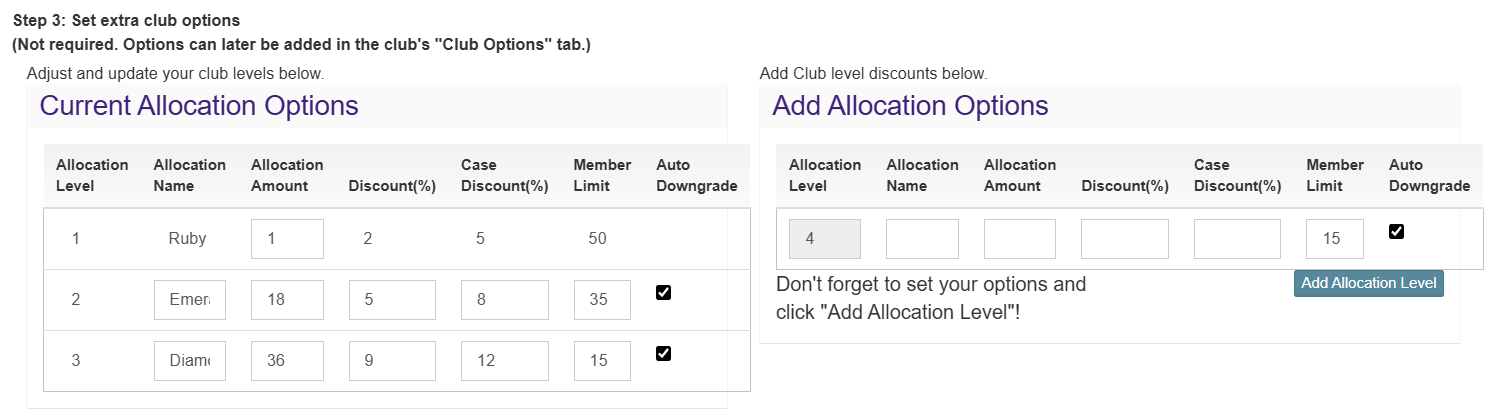
You can modify your allocation tiers at a later point by editing the club options.
Club Options
You can edit settings about the club in the Club Options tab.
Allocation Tiers
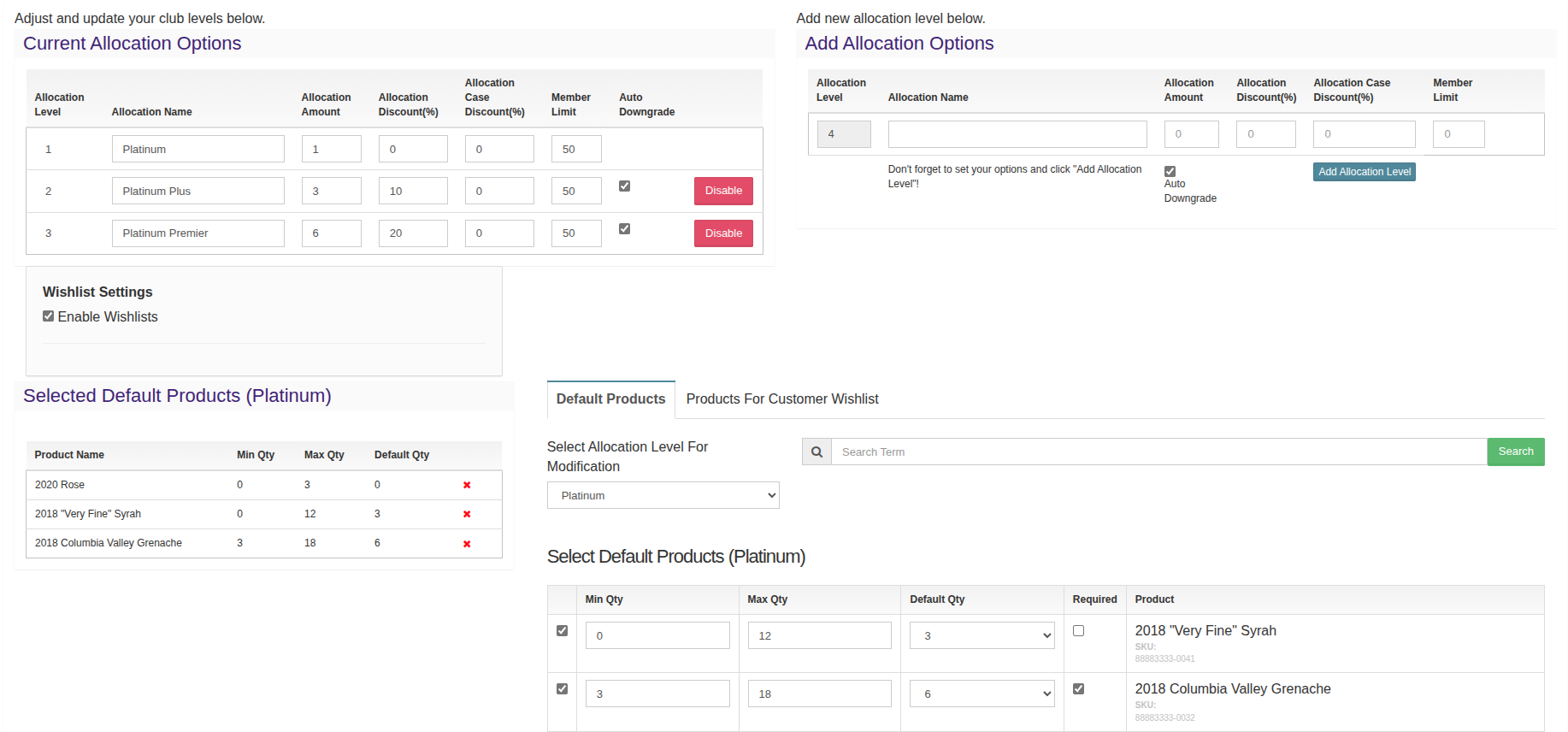
You can manage existing allocation tiers and add new tiers as well. Each tier you create will be its own customer class with its own discounts. The allocation amount defines the minimum purchase requirement in a release.
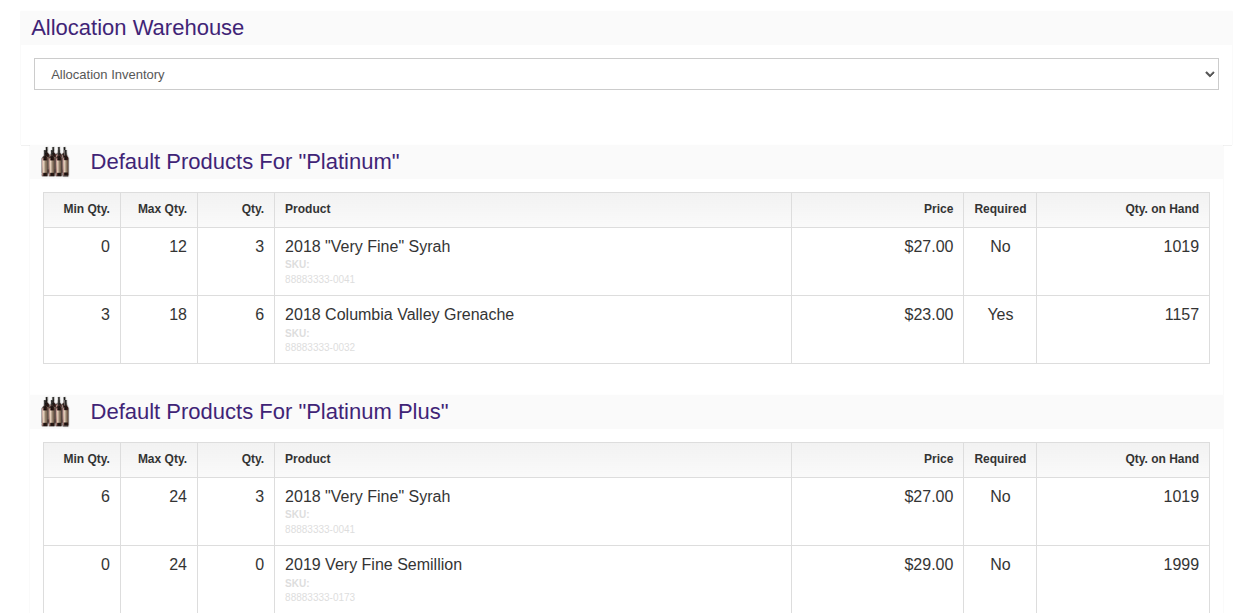
Default Products
Default products are automatically included in customers' releases. Your customers will be able to modify their releases based on the minimum and maximum quantities. Each tier of your club will have different default product settings.
Basket Minimum and Maximum
For each tier of the allocation club, when you run a club release, you can set a minimum and maximum bottle count or dollar amount that each member must purchase if they choose to participate in that release. If a member skips the release, they are removed entirely and will not be affected. Otherwise, all members are required to adhere to the limits set based on their club tier. 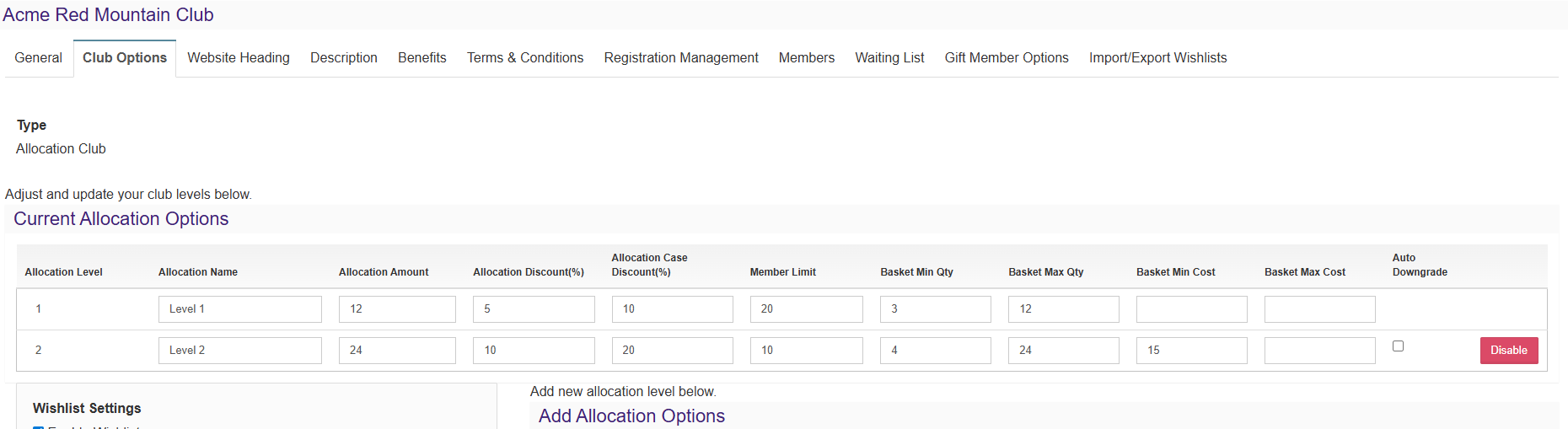
Setting up Wishlists
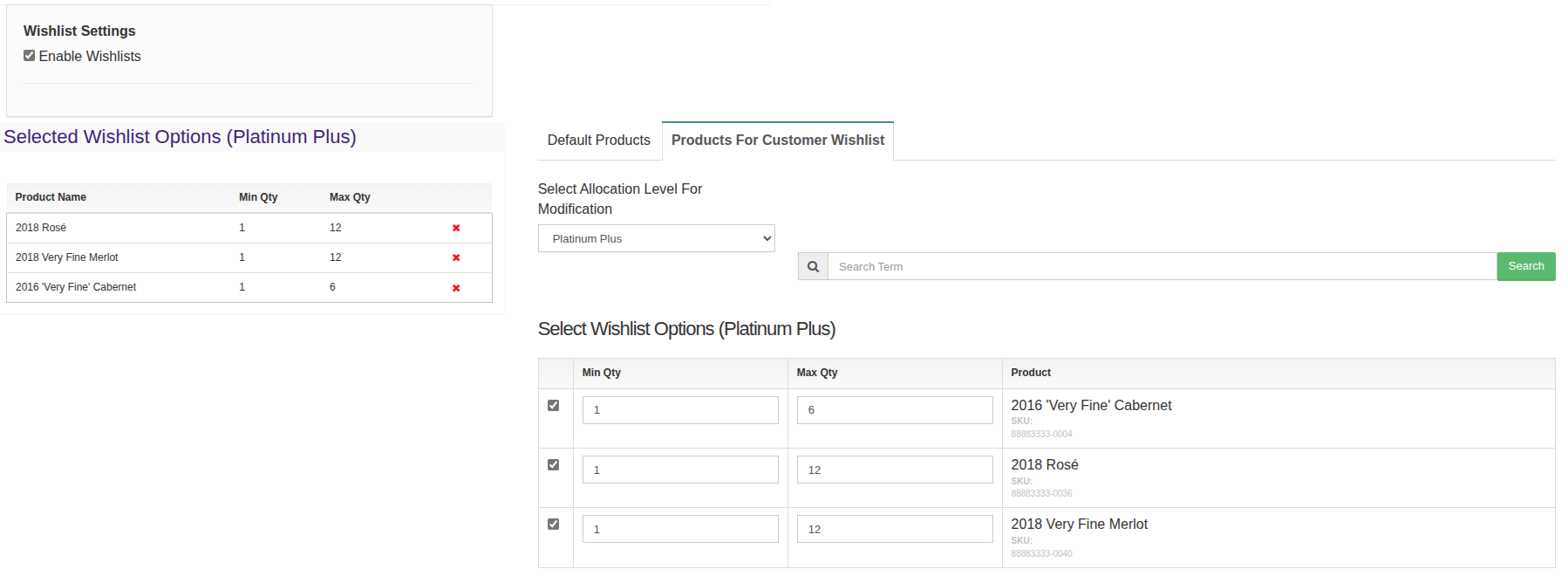
The wishlist is a feature that allows customers to request products that are outside their allotment's default products. After all the wine has been added, extra wines can be added to their order based on availability. This is done during the club release, which will be covered below.
Once enabled, you can add products available for wishlists. Each tier needs to be customized with minimum and maximum quantities.
Allocation Club Releases
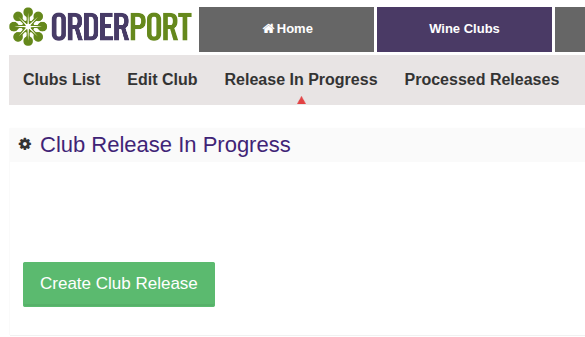
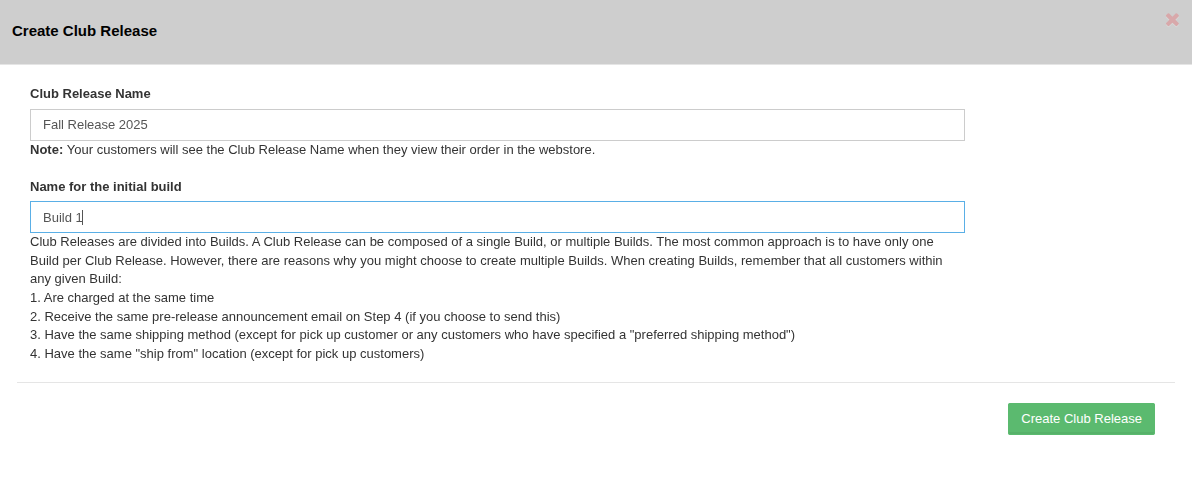
Most of the release process is identical to the Customer Choice clubs. Before conducting a club release, ensure your club's default products and wishlist products are set up. To start a wine club release, navigate to OrderPort Admin > Services > Wine Club > Select the Desired Club > Release in Progress tab. If you currently do not have an active release, click the Create Club Release button. A new window will open asking you to name the Release as well as name the first build.
The Release represents the club runs as a whole. Each release can have multiple builds, which can be used to organize the way in which members are processed. For example, the release would be named “Summer 2019 Club” and your first build could be named “Pick Up Customers” if you planned on processing them separately from shipping members.
Step One: Choose which Members will be Processed
The first step is to choose who will be in the build. There are various search options and filters that can be used to narrow down who you want to be in the build. For instance, you can filter to show only customers who will be picking up their order. You may choose to filter by club tier on the left.
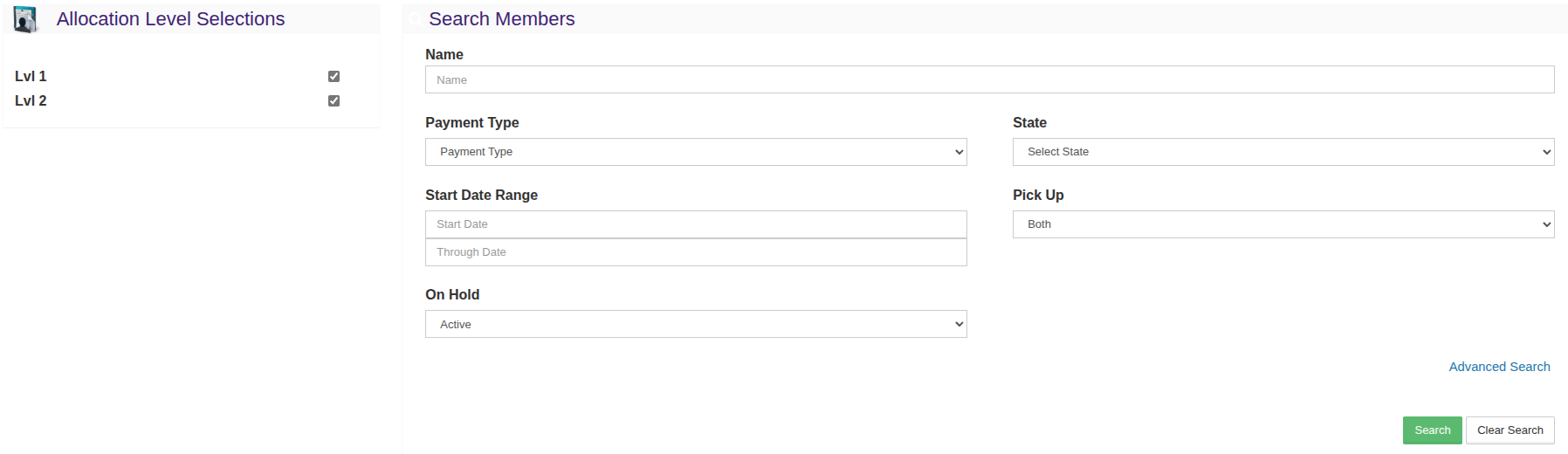
The system will keep track of the number of members in the build and show you a breakdown under “Stats.” It will show the number of people in the build who are pick-up customers vs those who are shipping customers. Once you have decided who will be in the build, click on the Next button in the top right-hand corner of the screen.
Step Two: Choose the Wines
In the allocation build, Step 2 will allow you to double-check the wines that are going to be available to customers. However, you won't be able to make any changes on this page. If you realize that a mistake has been made, you will need to complete the current release, make your wine correction, and then start a new release. Note: Starting a new build will not refresh the wines. You will change your wines, then start an entirely new release. If you are running multiple tiers in the same build, it will seperate the wines for the differnt tiers.
Step Three Part 1: Cart Creation and Shipping
You will be prompted to choose a shipping method, component cost & quantity, ship date, and given the chance to double-check your fulfillment location. Then click Get Shipping Options. Even if you are only processing pick-up orders, the system will ask for a shipping method. The system will recognize they are pick-ups and not apply shipping costs.
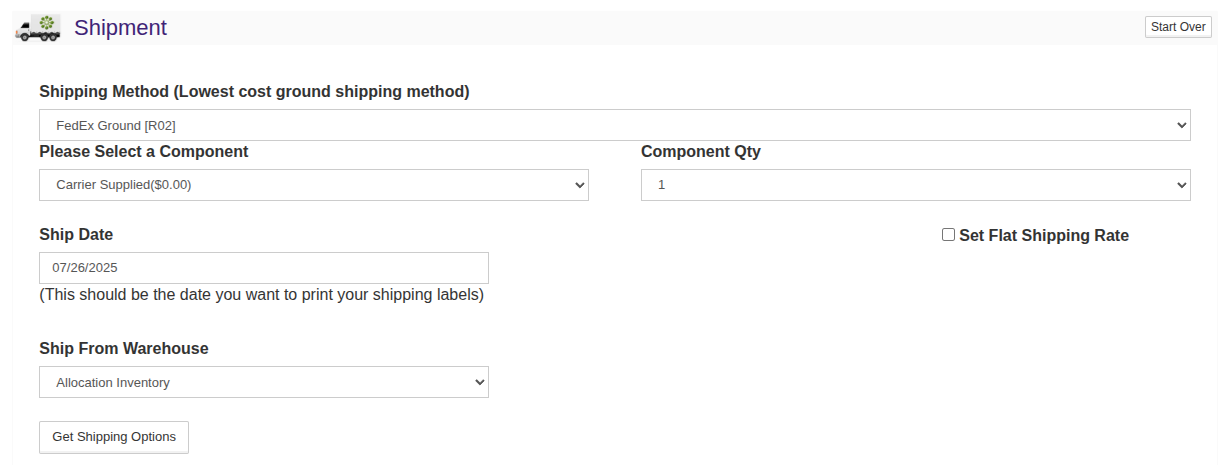
This is a build that contains both pick-up and shipping orders. The shipping method has only been applied to the customers that the module has designated as ship customers. The module allows for a change in shipping method or pick-up location to be made after the carts are created.

Problem Orders
A Problem Order occurs when a cart cannot be created for a member. This is generally due to a lack of necessary account information, such as a shipping address. Another common reason is not having a license to ship to the member’s state. Problem orders can be removed from the build so that the accounts can be updated. A new build can then be created to process those members.
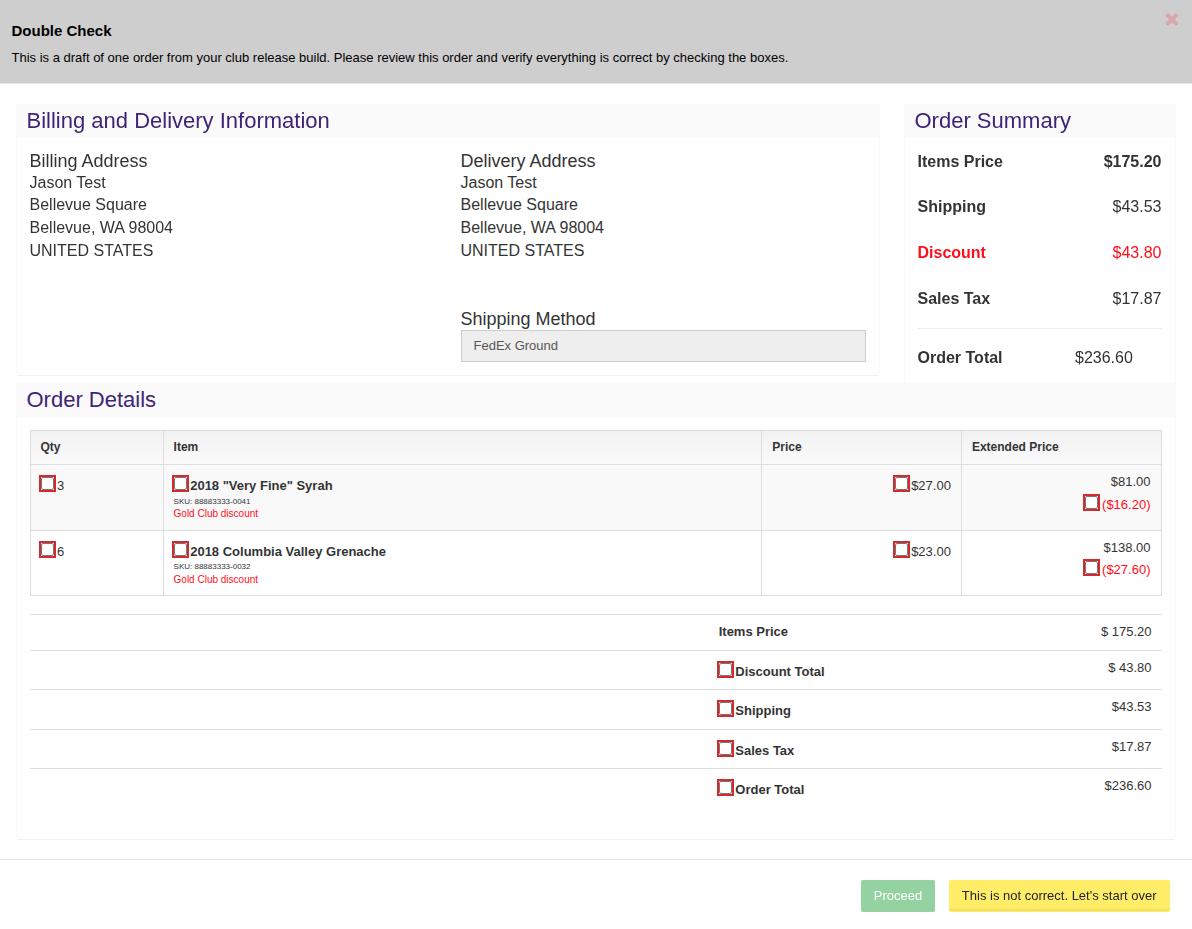
Step Three Part 2: Double Check
The next part of Step 3 will be to double-check the carts that have been created. The build will pull a member at random so you can verify the contents of the cart. This is to ensure that the wines, quantities, discounts, and prices are correct. If you are running a customer choice club, this will also be the case. Since no edits have been applied to orders yet, all carts are currently the same.
Check the red boxes to verify that each part of the order is correct. Once completed, click Proceed. If your cart items are not correct, click Start Over to re-create your cart on Step 3.
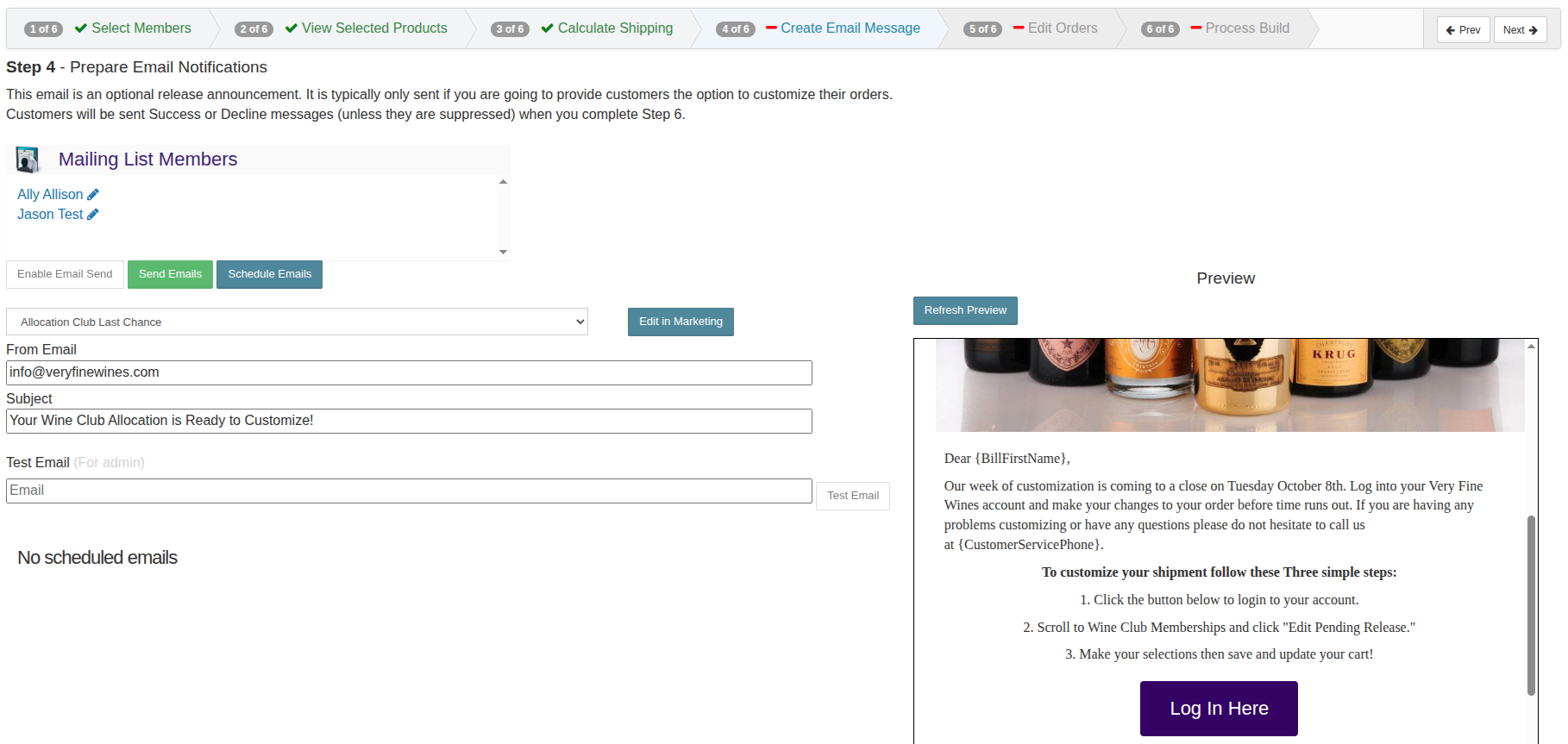
Step Four: Sending your Club Release Email
Step 4 of every wine club build is the customer email. When processing a Customer Choice club, this email is the best way to inform customers not only of their options but also to let them know how much time they have to make their selections.
You must select a design that you have created from the marketing module. There is no option to create an email from this page. The wine club module will automatically save your spot so you can go create that design in the marketing module.
The Placeholders will automatically pull in customer information, and each customer will receive a personalized email with their billing and shipping information. You will also be able to use Placeholders to pull cart/order information into the email.
Step Five: Editing Orders
On Step 5, you can make edits to carts on behalf of the members in the build. You will be presented with the list of carts and can use the search bar to find a specific member.
Click on the member’s name to open the cart for edit. You will have the ability to change the shipping method or mark an order as a pick-up. The items can be edited, as well as the prices and discounts. The functionality is the same as using the Admin Cart to edit an order. In addition to editing the wine that’s in the cart, new items can be added by the winery. Changes will be saved automatically

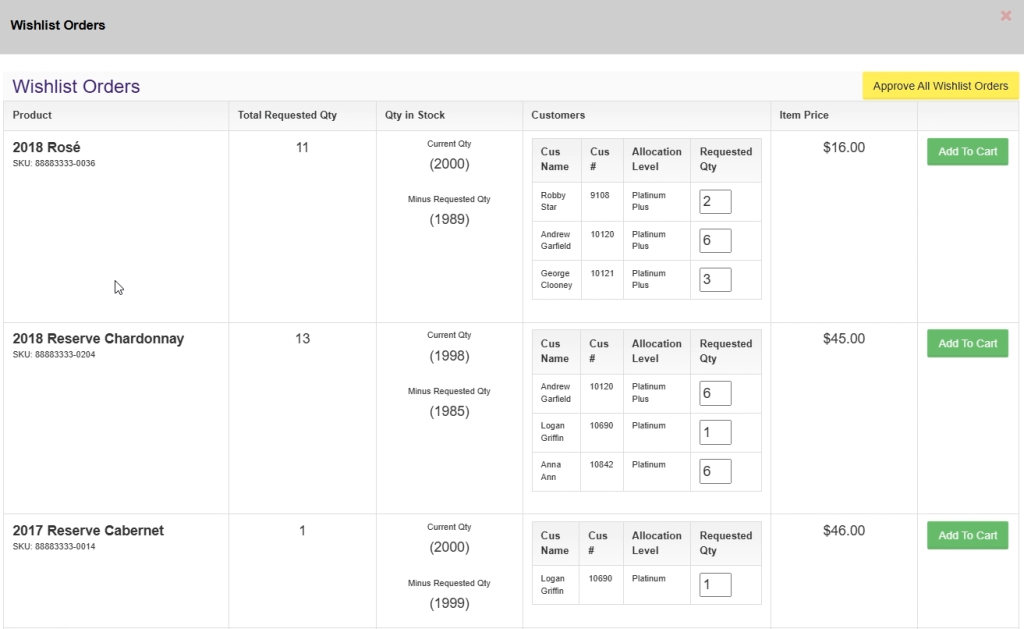
To view wishlist orders, click View & Approve Wishlist Orders. From here, you can view live inventory numbers and requested items, then decide to approve wishlists based on this information.
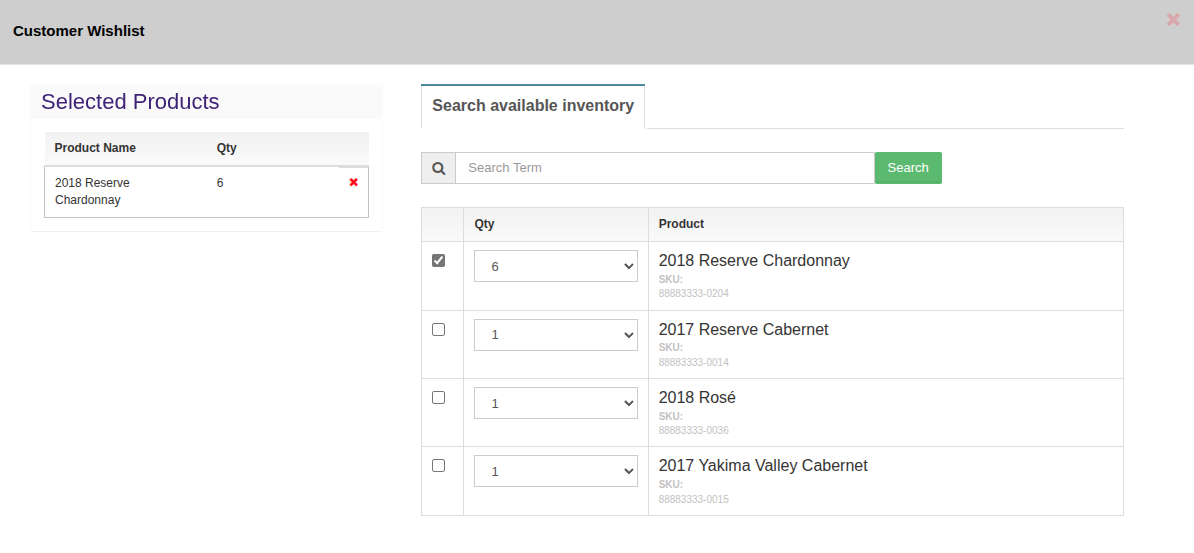
If you need to manually update a club member's wishlist from OrderPort admin, go to the Customers tab and search for the member. In the memberships tab, you will see the Wishlist Items button. Click this to edit the wishlist.

Step Six: Completing the Build and Authorizing Credit Cards
You will be given the list of actions that will occur once the Finish button has been clicked, including the next steps. The build will begin the billing process, which means that the cards on file for the members will be authorized. When the process is complete, you will be given a report showing whether a cart was processed successfully or not.

Schedule Build Run
Coming soon, OrderPort is introducing a new feature that enables users to schedule each build for finalization and fulfillment on a specific date and time. After completing steps 1-5 of the club release, you will encounter a toggle labeled Schedule Build Run in step 6. Once activated, a few settings will appear.

- Select the desired date and time for this run to take place.
- Specify if you want to capture funds and process them through fulfillment to the carrier terminal.
- If you choose yes, the funds will be pushed into the carrier terminal, and an attempt will be made to capture the funds.
- If you choose no, it will act the same way as if you clicked the finish button, but you have the option to schedule it.
- If you are not using the OrderPort inventory system and decide to bypass inventory checks during order fulfillment while opting for auto capture of funds, make sure to select this option here as well.
After scheduling your release, click Save to enable it. You can return to this page anytime to modify the date and time of completion if necessary.
Reviewing Scheduled Fulfillment Orders
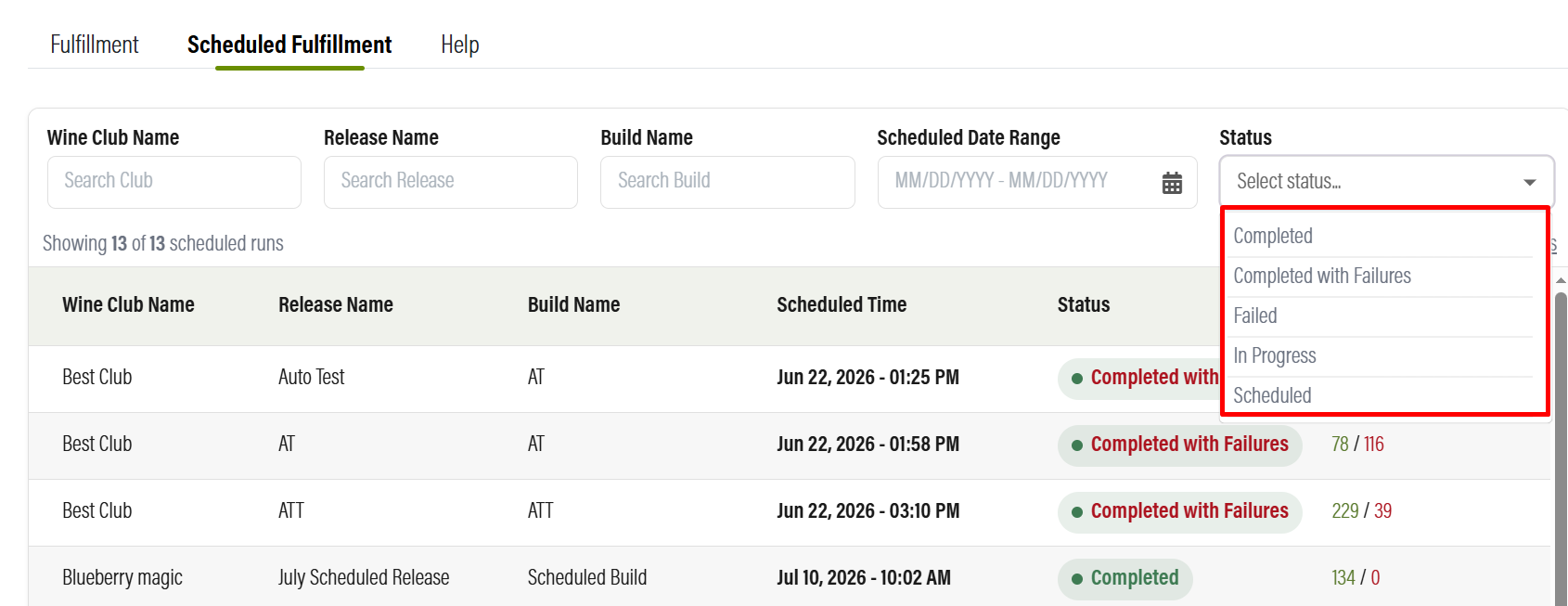
Once the designated date and time have passed, and the club run commences processing, you will be able to monitor the progress of the release within the fulfillment module. Upon entering fulfillment, a new tab labeled Scheduled Fulfillment will be available.
Utilize the filters located at the top to search for your club release. Please be aware that these are build specific; hence, if you have executed multiple builds in the release, each will have its own line item.
Scheduled fulfillment has 4 statuses.
In Progress - The release is currently being processed.
Completed - The release has been successfully completed with no failures or declines.
Completed with Failures - The release has been completed, yet some carts have failed or declined.
Failed - The entire build has failed to process.
Once you locate the build you wish to examine, click on it. This will take you to a comprehensive report of the process. At the top, you will find a breakdown showing when the release was scheduled and completed, along with the number of orders that were successful, in progress, and failed.
If you click on each of those statuses, it will filter the orders in the list below according to the selected status. Failed orders may include anything from declines to backorders if you didn’t opt to skip inventory checks. To view the reason for the failure, hover over the status message on each order.
The action button is utilized to print pick lists, packing slips, and receipts and invoices in bulk.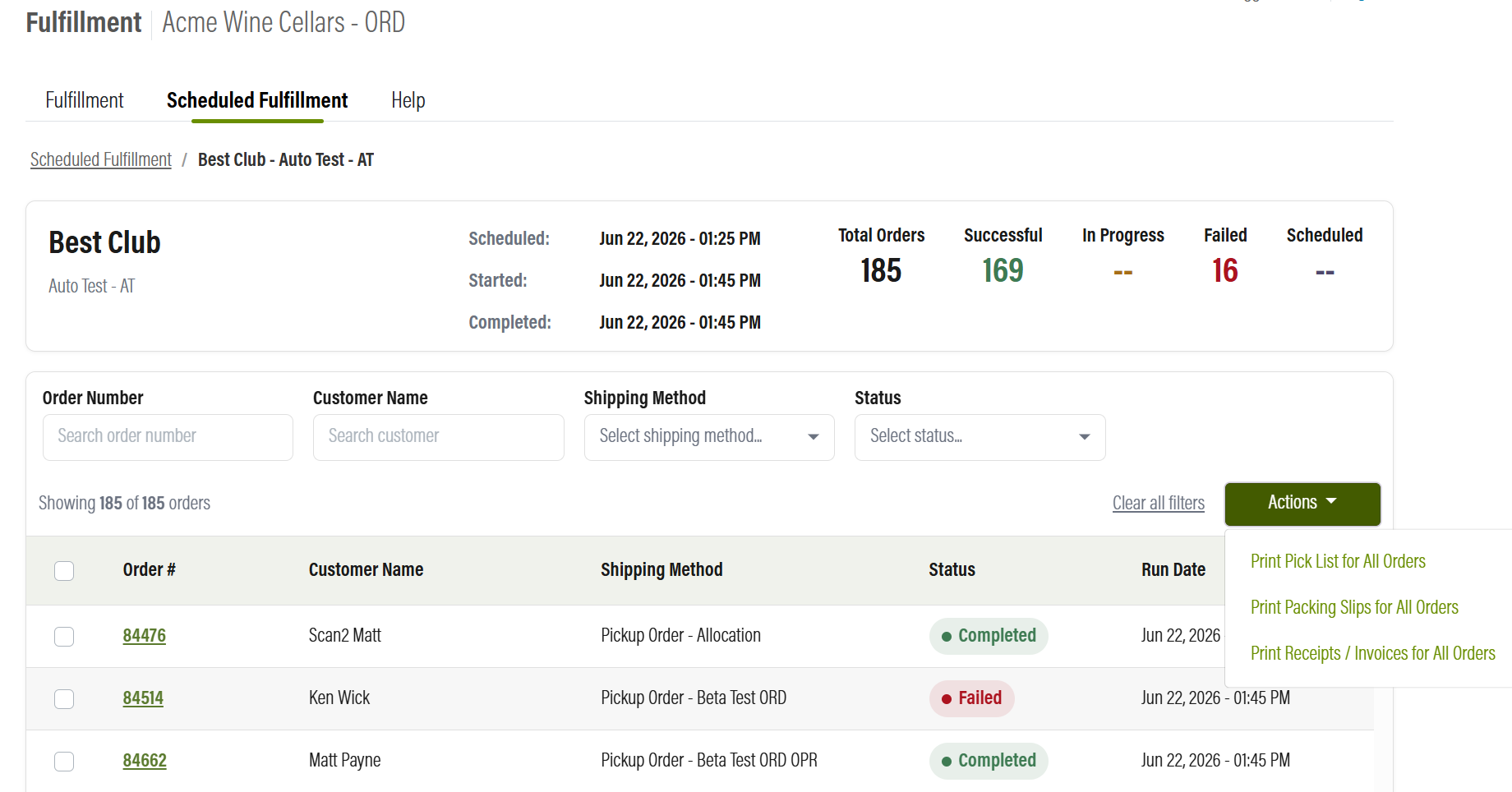
After finishing this step, you can view a report for successful and failed orders. The next step is fulfillment for the orders.
