OrderPort webstores are built to match the existing theme of winery websites. The header, footer, background, font, and colors of the webstore will be consistent with your existing site. For this reason, your website design should be finalized prior to starting your webstore setup process.
If you are still in the onboarding process for OrderPort, you can reach out directly to your Customer Success agent to initiate the webstore design process. Reminder: ‘Website’ refers to the primary domain and website that you manage and host. ‘Webstore’ refers to the pages built by Orderport to match your website.
If you are already live on OrderPort and would like a new webstore, or a modification to your existing webstore, please contact helpdesk@orderport.net.
TABLE OF CONTENTS
- Catalog Manager Updates
- Customers Module Updates
- Account Module Updates
- Wine Club Module Updates
- Making the Webstore Live
- Webstore Designer Module
- FAQ's
- Catalog Manager: Images Not Appearing on Webstore?
- How to Disable Certain Credit Card Types for Webstore Orders
- How do I reset my password for the webstore, and what should I do if the password reset link doesn't work or I didn't receive the email?
- How do you make products Wine Club only?
- In the Catalog Manager, search for the desired Product. In the “Product Info” tab, scroll down to “Customer Class Prices & Discounts” and Uncheck the ”Consumer” class. Then, navigate to the Status tab and select “Club Only”. Enter the text that you want the consumers to see when they try to select the product and save changes.
- What is CAPTCHA and why would I enable it?
- Why is my SubGroup not appearing on the Point of Sale or Webstore?
- Can I show all of my wines on the landing page?
- What is a Favicon?
- How can I change the maximum number of items per page on the webstore?
- Can I make a rule to put minimums on webstore orders?
- Can I designate a particular warehouse for webstore orders?
Catalog Manager Updates
Webstore Groups
Once OrderPort has built your webstore, you can start setting up product groups. Your webstore will be divided into subgroups that you can set up in the Catalog Manager.
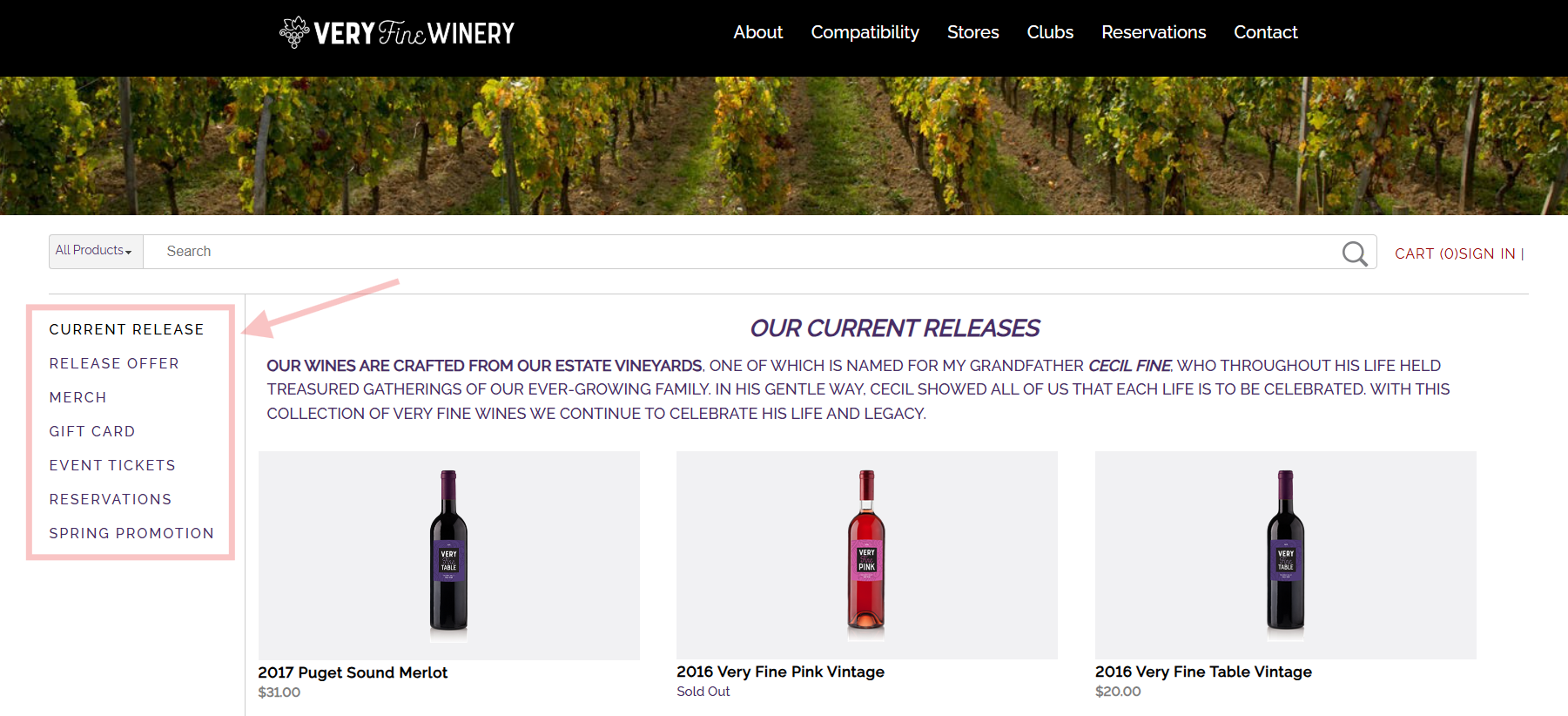
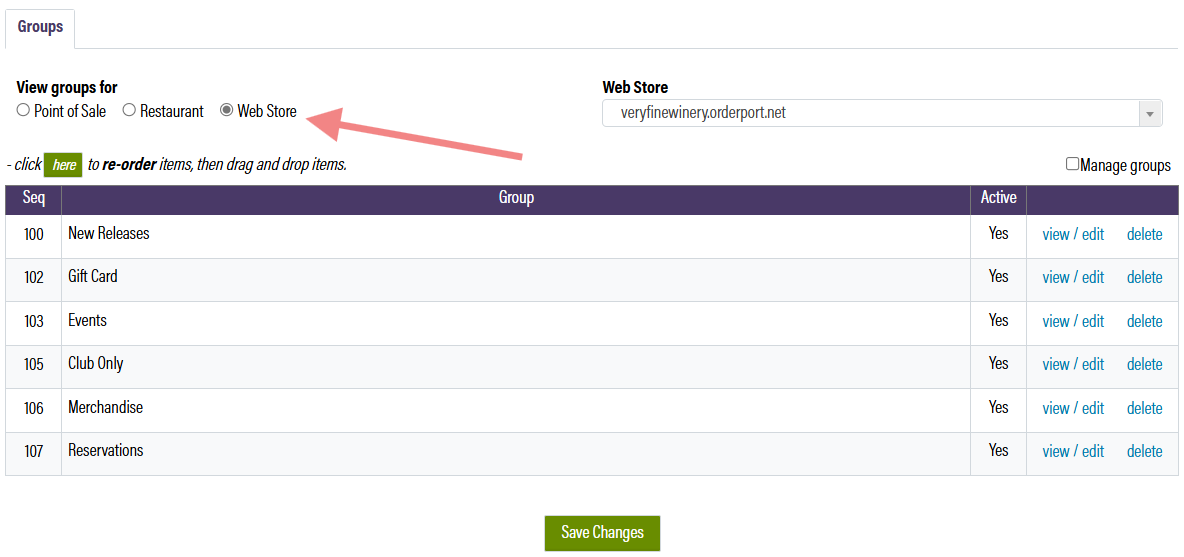
Wineries with a small number of wines might have a single group called "Current Releases", or "Our Wines". Others may choose to have more groups, such as "Red Wines", "White Wines", "Merch", etc. In the screenshot below, you can see a sample of webstore groups.
Creating Groups
To create a new group for your webstore, follow these steps:
1. Open the Catalog Manager from OrderPort Admin.
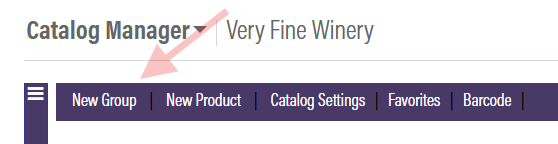
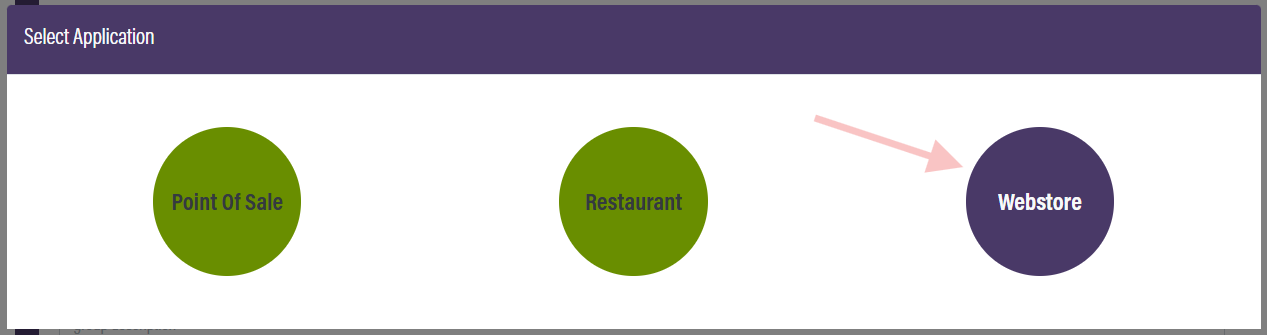
2. Create a New Group. The New Group button is the leftmost on the ribbon menu. Select Webstore.
3. Fill out the information. If you'd like to make this group a subgroup of another, you can change the parent group.
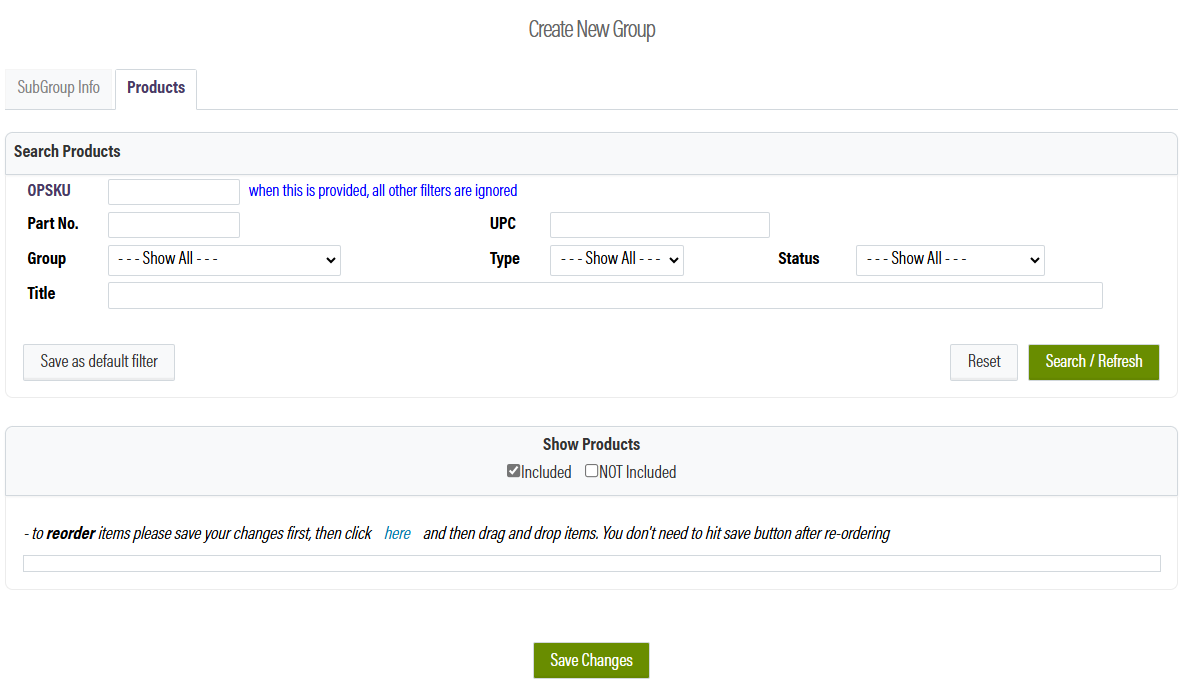
4. Add products to this group. You can use the Products tab to do this. You can also do this later, after setting up all your groups.
5. Save the group.
Managing Groups
To manage your groups, you can click the groups button on the right of the ribbon.

Once on the Groups page, make sure to select Webstore from the view options.
From here, you can edit, delete, and reorder the groups. To reorder a group, click and drag the group names into the correct order. Then click Save.
Group Presentation
There are two main ways to change the presentation of your group. The first is by adjusting the number of products displayed on a single page of the webstore, and the second is by adding text to the group.
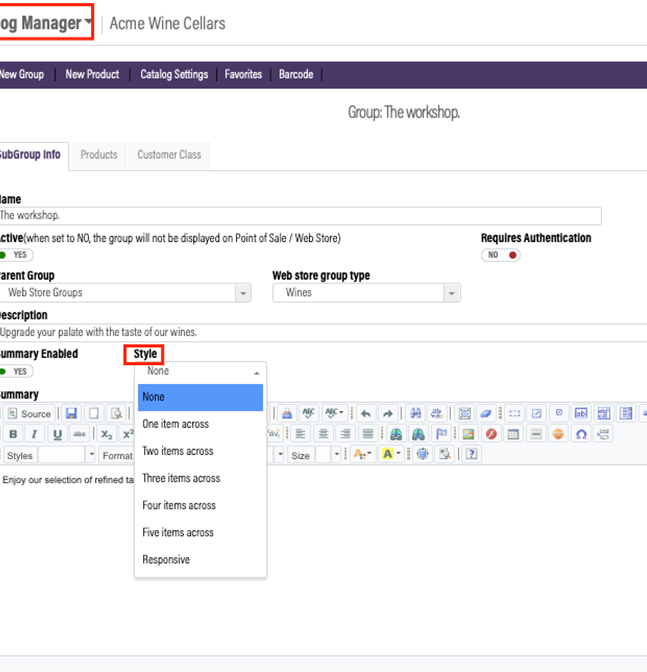
To do this, go to the Catalog Manager and select the "Groups" tab. From there, choose the desired webstore group and view or edit it. Finally, select a style from the dropdown menu.
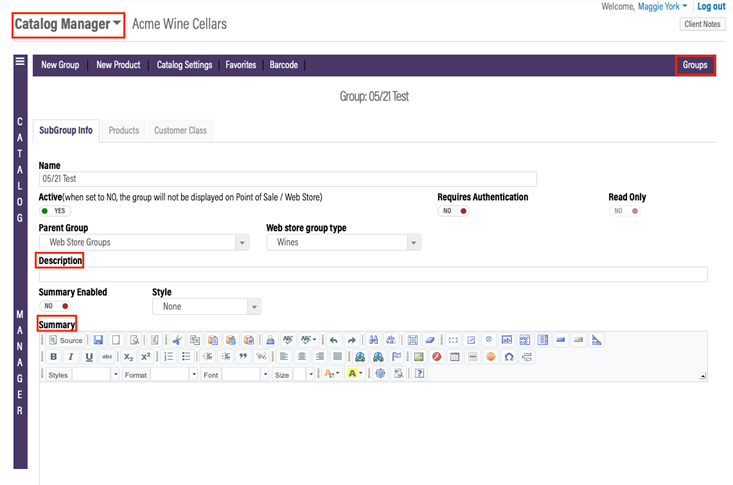
On this page, you will find a summary text box. This summary field will be displayed at the top of the webstore group. Please note that we do not recommend copying and pasting text into this field, as it can cause formatting issues. If you do wish to copy and paste, make sure to use the blue "clear format" button.
Customer Class Exclusive Webstore Groups
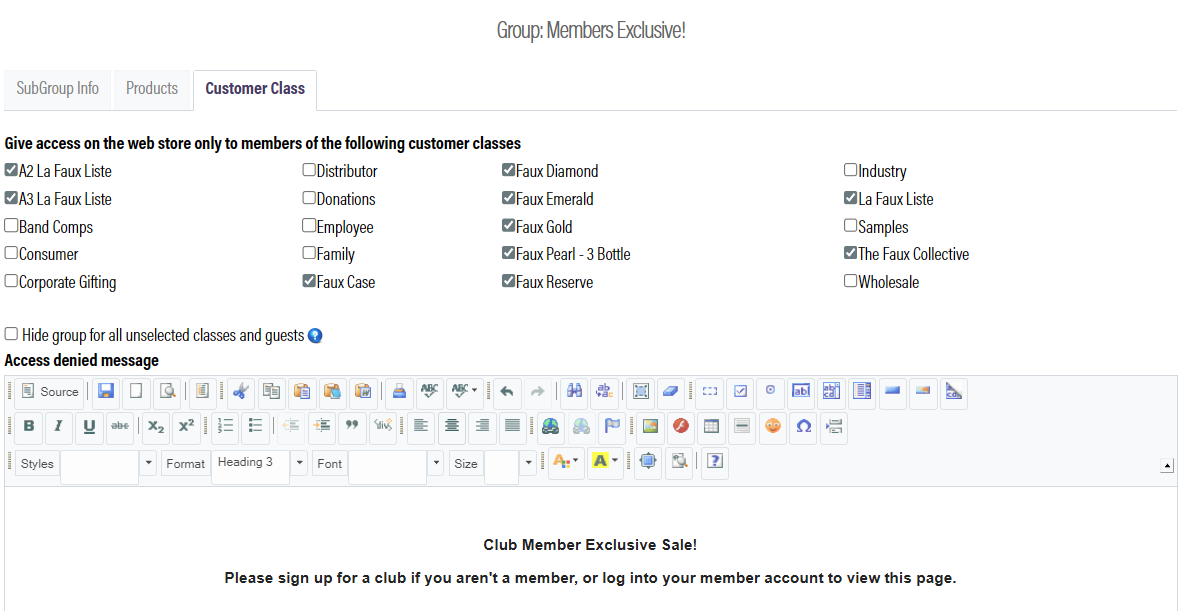
You can set up webstore groups to be exclusive to specific customer classes. For example, if you wanted to offer a special sale for your club members, you could set up a group and display it only for your wine club customers.
Go to the Groups page, view the groups for the Webstore, then click on the view/edit button for your group. Next, go to the customer class tab.
From here, you can select which customer classes have access to the group, and you can choose to hide the group from the menu altogether. If you do not hide the group, all customers can see the option on the menu, but will encounter the access-denied message.
Adding Products to Groups
You can add products in two ways:
1. Adding multiple products to a group at once.
Go to the Groups page, view the groups for the Webstore, then click on the view/edit button for your group.
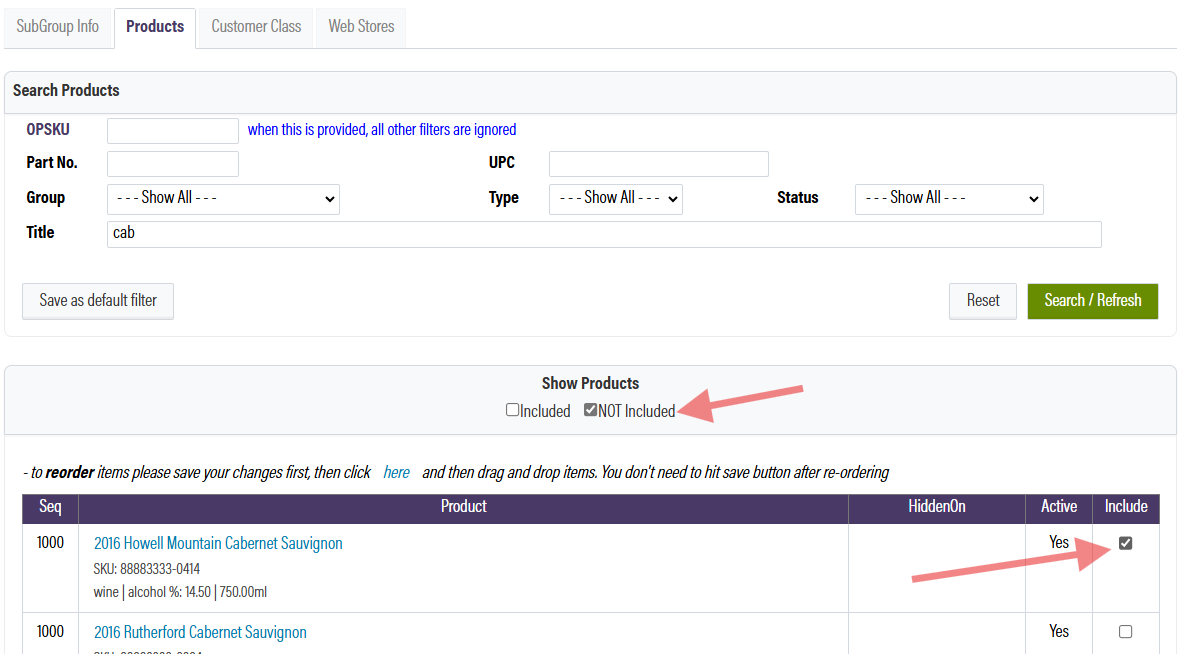
Go to the Products tab, then check the NOT Included option to browse products that aren't yet added to the group.
Search for the products you'd like to add, then check the boxes. Make sure to save the changes.
2. Adding an individual product to groups.
You can open an individual product in the catalog manager, go to the groups tab, then check the box(es) for the group(s) you want to add the product to.
Configuring Product Presentation
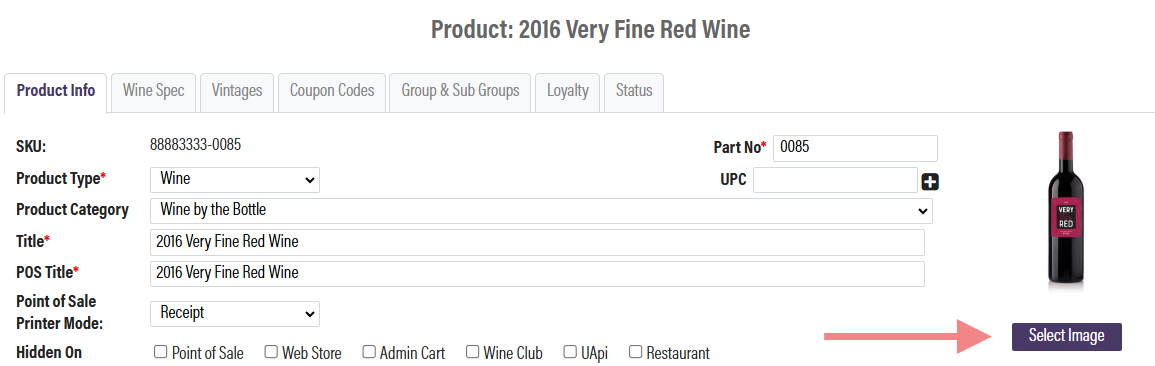
To present your products on the webstore well, you can add images and product information in the Catalog Manager.
Product Images
In the Catalog Manager, you can add images to products. The file types of PNG and JPG are supported. They have a maximum size 3024 x 4032 pixels, and a maximum 96 dpi. If you would like transparent backgrounds for your photos, make sure to use PNG files.
All images will be automatically resized, based on the catalog settings. For best results, you should utilize consistent photo sizes across all your products.
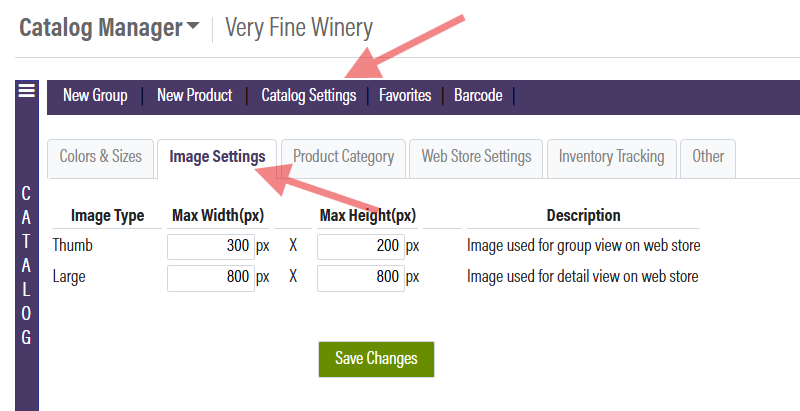
In the Catalog Manager, there is a section titled Catalog Settings on the top purple bar. There are two main tabs that affect the webstore.
Image Settings
The image settings tab allows you to set the resize image for your product images. This will affect all existing products. Please note it can take up to 5 minutes for the webstore changes to take effect.
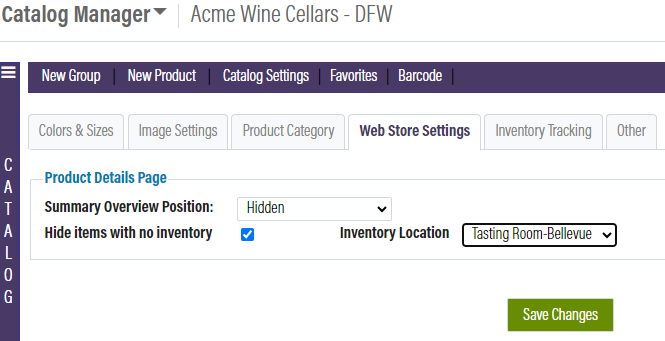
Webstore Settings
The “Webstore Settings” tab allows you to choose if you want items with no inventory to display on the webstore.If you have this setting on all items without inventory in the selected warehouse will not be displayed on the webstore for purchase.
Product Details
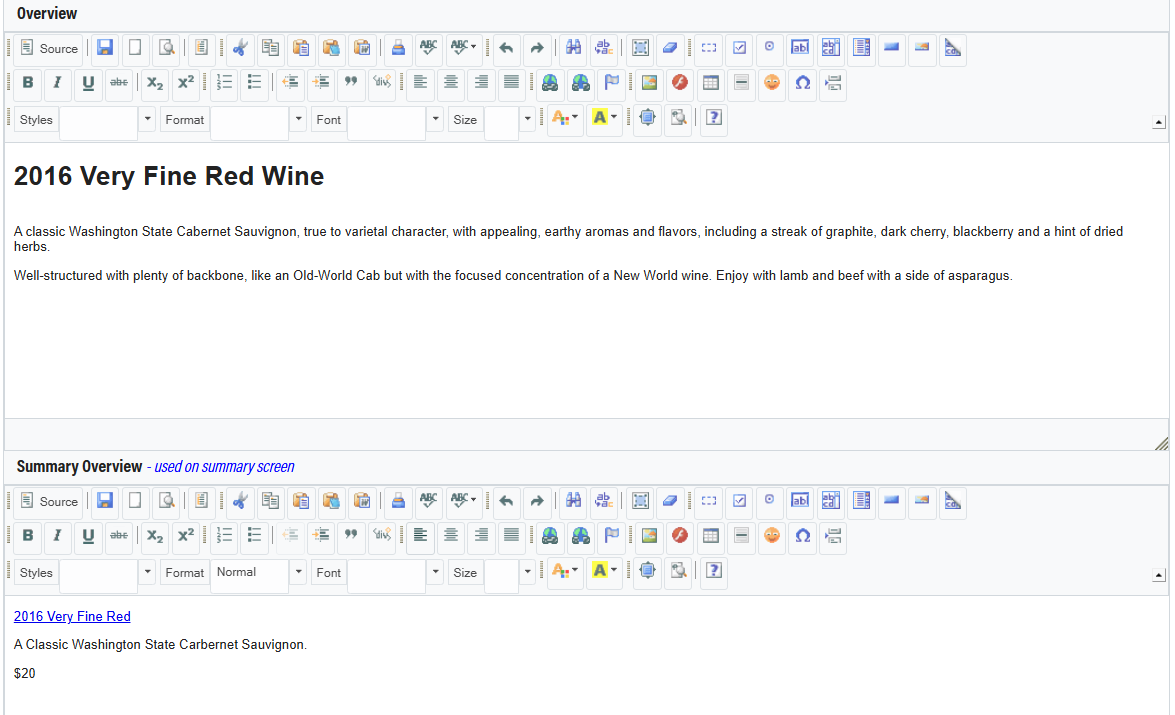
To add details to your products that will appear on the webstore, fill out the Summary Overview and Overview sections. The Summary Overview is a short description of the product that may appear on the product listing page. The Overview appears on individual product pages.
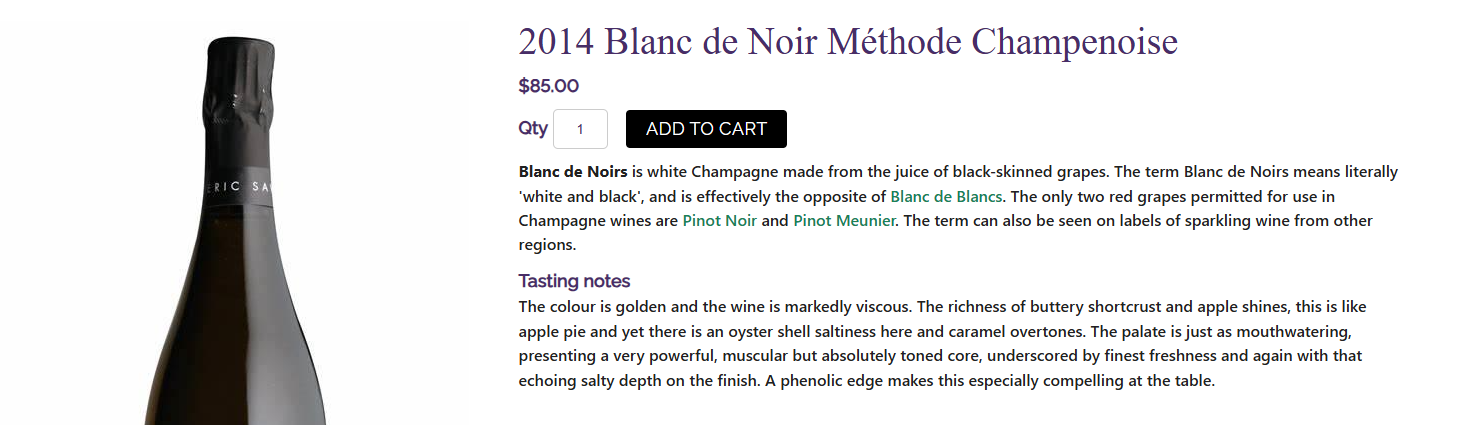
Further details can be added in the Wine Specs page, and this may be displayed depending on your webstore configuration.
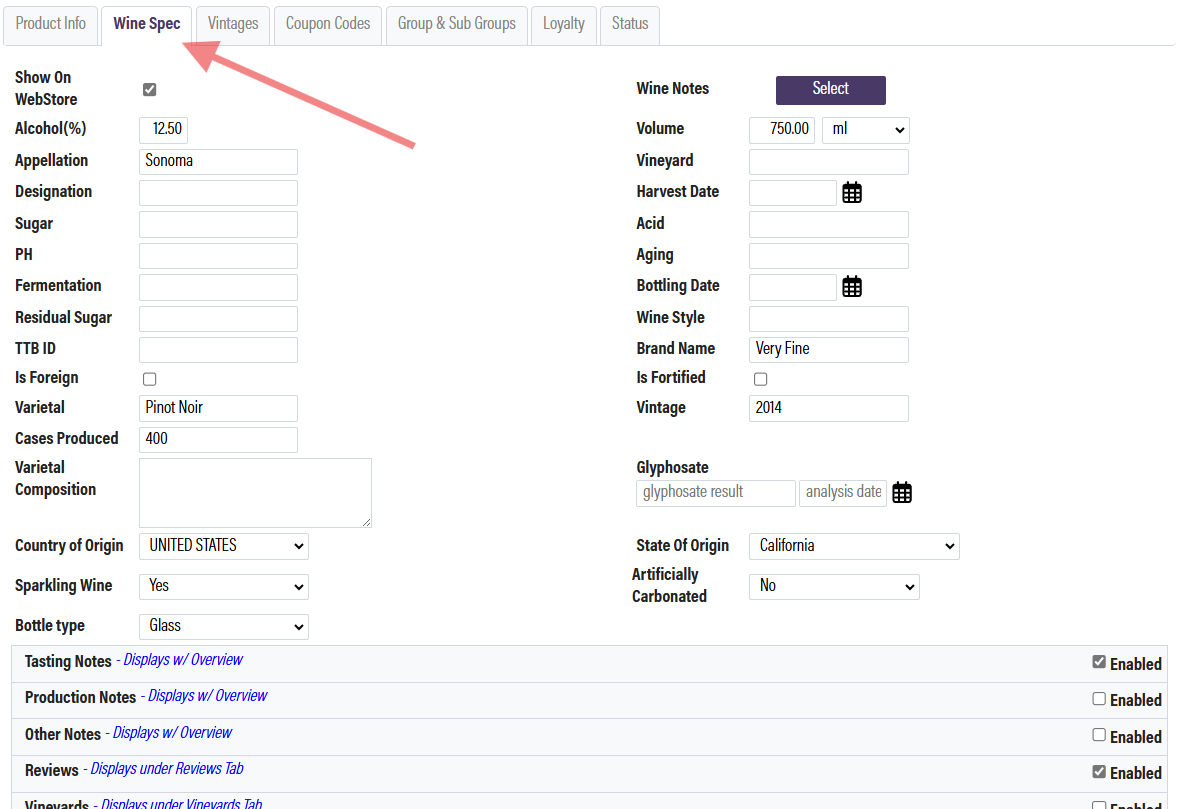
In addition, under the “Wine Specs” tab, you have the option to display information about the vineyards and winemakers by checking the enable box and inserting text. Please try not to copy and paste text as this can cause formatting issues.

Rearranging Products
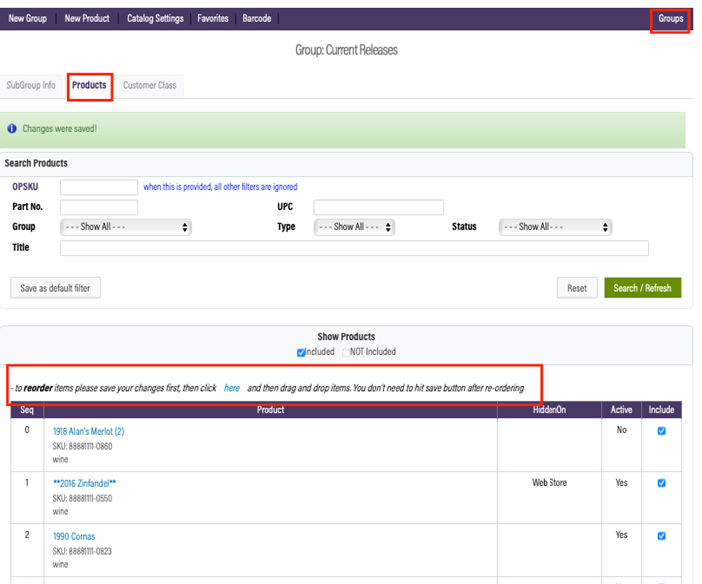
In the Catalog Manager, select the group's button in the top right-hand corner. From there, please select “Web Store” under “View groups For”. Click View/Edit on the desired groups and select the products tab. Follow the instructions on the page under "Show Products".
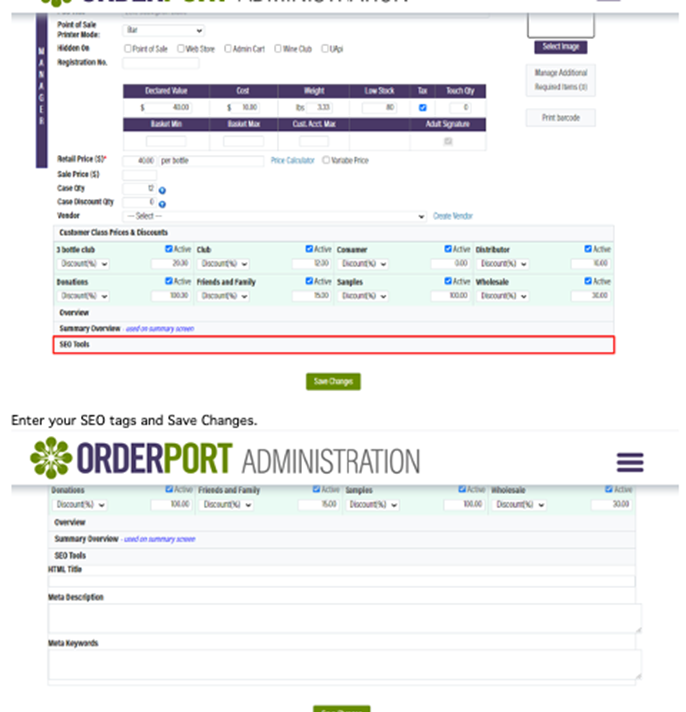
Adding Meta Keywords and Descriptions
In the Catalog Manager, search for the product that you want to add an SEO keyword and description. View its product information and scroll down to the row called SEO Tools. Save changes when finished. Search Engine Optimization (SEO) is the process of improving a website’s visibility in search engine results to attract more organic (non-paid) traffic. One way to support SEO is by using meta tags, including meta keywords and meta descriptions. Meta keywords are a list of relevant terms related to the page’s content, while meta descriptions provide a short summary of the page that appears in search results and can influence whether users choose to click.
Customers Module Updates
Some of the text like the Shopping Summary pull form information in the Customers Module.
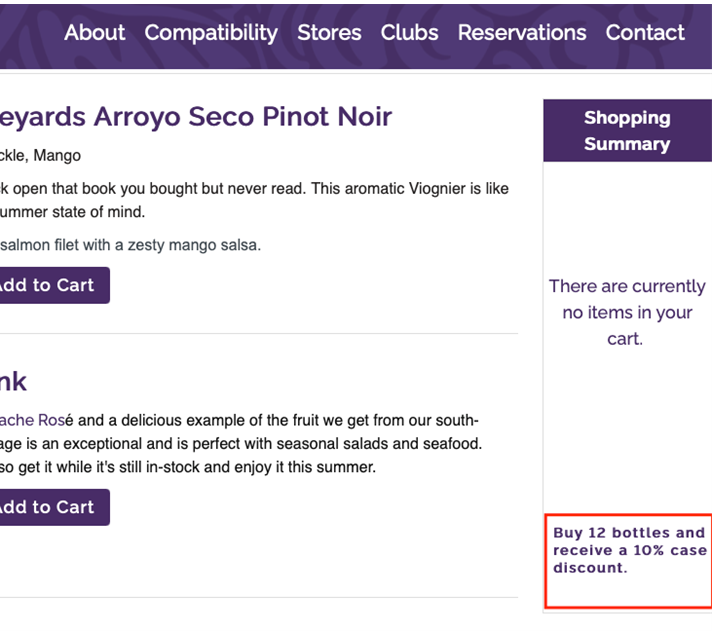
Updating the Case Discounts on the Shopping Summary
Update this by going to Customers > Customer Class > Edit the Consumer class > Case Discount > Update customer class. If you are looking to change or delete the text contact OrderPort support.
Account Module Updates
Some of the webstore settings are located in the Account Module.
Enabling CAPTCHA for Customer Account Creations
Navigate to the account module. Under the Company Info tab you will see a section titled "Web Store Settings". From there click the check mark next to "Enable CAPTCHA for Customer Account Creation".

Enabling Webstore Abandoned Carts
Navigate to the account module. Under the Company Info tab, you will see a section titled "Web Store Settings". From there, click the check mark next to "Enable Webstore Abandoned Carts".

Enabling Cookie Consent Banner
Navigate to the account module. Under the Company Info tab, you will see a section titled "Web Store Settings". From there, click the check mark next to" Enable Cookie Consent Banner".

Wine Club Module Updates
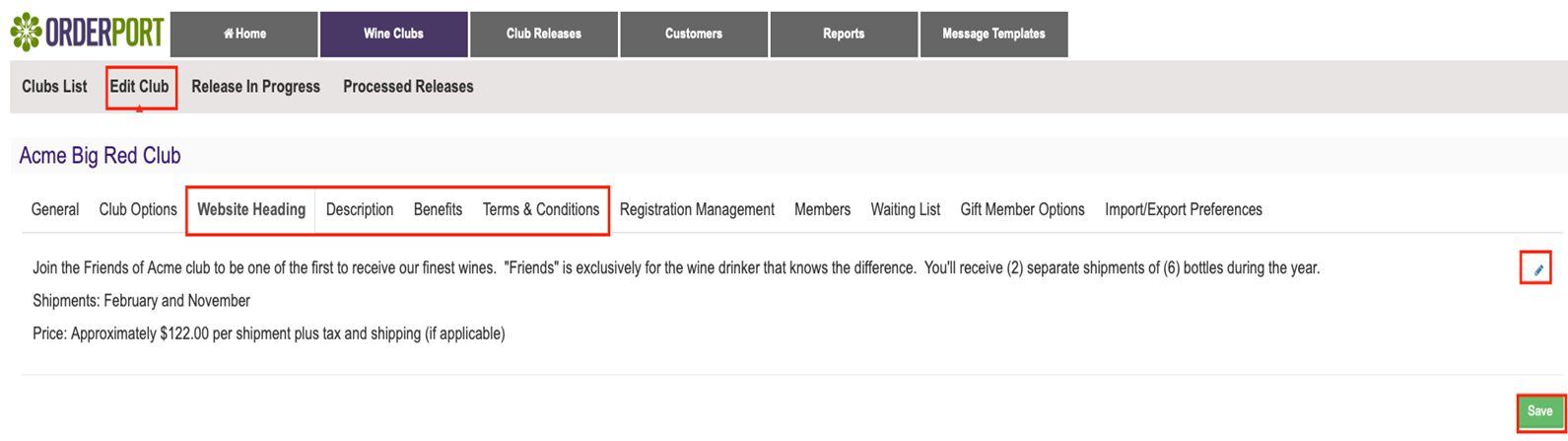
Some of the wine club information located on the webstore is pulled from the wine club module. Changing the verbiage on the Wine Club Description, Benefits, Terms and Conditions, and
Website heading. Navigate to the Wine Club module and select the Club tab. Select the desired club and make adjustments in the Website Heading, Description, Benefits, and Terms & Conditions Tabs.
Making the Webstore Live
Once you have customized your webstore to your liking, you can go live by adding links to it from your website. Depending on how your main website is set up, the process may vary. In order to integrate the Orderport webstore pages into your main website, you will have to access your main website’s editor, builder, or administrative panel. You will add the webstore links throughout your website.
The link format is https://{YourDomainHere}.orderport.net/{site}
For example, the shop page for Very Fine Winery (OrderPort's demo webstore) is https://veryfinewinery.orderport.net/shop.
Common integration examples:
➢ SHOP
- Update the ‘Shop’ button in your website’s header to link to the OrderPort webstore.
- Shop link example: yourwineryname.orderport.net/wines
➢ SIGN IN
- Add a ‘Sign In’ button to your website that links to OrderPort’s account portal.
- Account portal link example: yourwineryname.orderport.net/auth
➢ SIGN UP
- Create 'Join Club' buttons that use the webstore's club registration links
- Club registration link example: yourwineryname.orderport.net/wine-club/s6219/gold-club
You can view all the available site extensions and sample pictures here: Introducing the Orderport Webstore.
Adding webstore links to a WordPress website
You can use the following documents from WordPress Support to learn how to use 'Custom Links' to add your webstore to your WordPress website
Adding webstore links to a GoDaddy website
You can use the following documents to link your webstore to your GoDaddy site
Adding webstore links to a Squarespace website
Watch the video linked below to learn how to add links to your Squarespace site
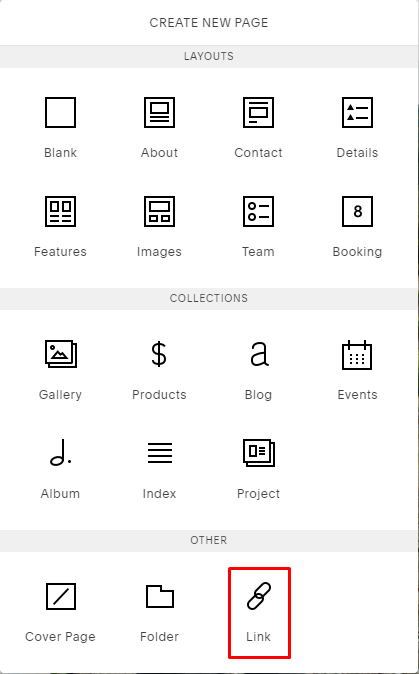
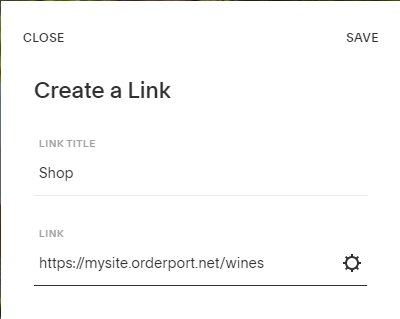
Once you log into your site on Squarespace, click on the 'Pages' tab to the left. Then click the + sign next to Main navigation. At the bottom, click on the option titled 'Link'. Input the name of the tab and paste the OrderPort webstore link. Once added, you can drag the new link into the proper position using the panel on the left.
If you need assistance with integrating your webstore into your website, you can send an email to Helpdesk@Orderport.net and request assistance from the webstore specialist.
Webstore Designer Module
For more advanced customizations, you can utilize the Webstore Designer Module. This is an advanced feature, and you should only use it if you are familiar with HTML and CSS. Please see this document for more information: Complex Webstore Updates Done by Wineries.
FAQ's
Catalog Manager: Images Not Appearing on Webstore?
If you're experiencing issues with images not displaying on the webstore, please verify the following requirements when uploading:
- The images must be in PNG or JPG format. If you're having difficulties, consider converting the image from JPG to PNG.
- The file dimensions should be no larger than 3024 x 4032 pixels.
- Images must be in RGB color mode, not CMYK.
- All bottle shots should be the same size and maintain the same aspect ratio.
- Do not refresh your screen at any point while uploading the image.
How to Disable Certain Credit Card Types for Webstore Orders
To disable specific credit card types for webstore orders, follow these steps:
- Log in to OrderPort Administration.
- Navigate to the Payment Processing module located under Settings.
- Select the "Accepted Credit Cards" tab.
- Check or uncheck the card types you want to be accepted on your webstore.
Please note that this feature is only available for webstore orders.
How do I reset my password for the webstore, and what should I do if the password reset link doesn't work or I didn't receive the email?
To reset your password for the webstore, locate the password reset link on the sign-in page. If the link doesn't work when clicked, ensure you don't double-click it, as doing so will invalidate the link and require you to request another. If you didn't receive the password reset email, keep in mind that it may take a few minutes to arrive, and clicking submit again will render any previous reset emails invalid. Remember, the password reset link is valid for 24 hours.
How do you make products Wine Club only?
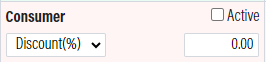
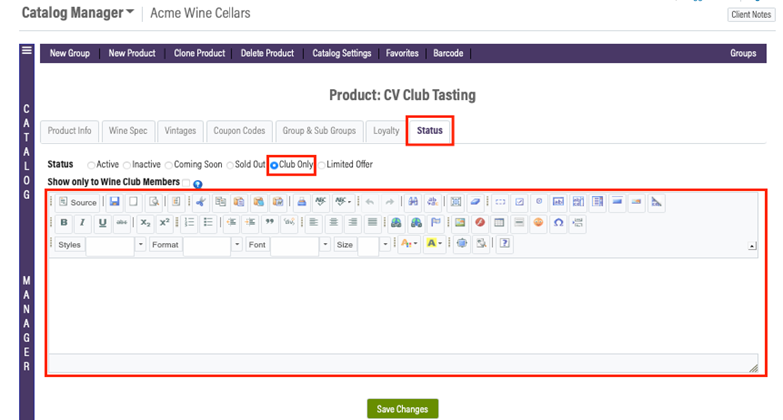
In the Catalog Manager, search for the desired Product. In the “Product Info” tab, scroll down to “Customer Class Prices & Discounts” and Uncheck the ”Consumer” class. Then, navigate to the Status tab and select “Club Only”. Enter the text that you want the consumers to see when they try to select the product and save changes.
What is CAPTCHA and why would I enable it?
In the web store settings section, you may choose to enable CAPTCHA. CAPTCHA is a security feature we offer that will help to screen out bots or spammers who may try to create an account with your winery.
Why is my SubGroup not appearing on the Point of Sale or Webstore?
If the sub group is created and there are no products associated with it or the group is “hidden”, then the sub group will not appear in the POS or web store.
Can I show all of my wines on the landing page?
You cannot display all wines on the landing page, as customers must first select a group or subgroup from the menu. The products will appear under the group they are assigned to in the web store, so users need to click on that group to view the wines.
If you want to direct customers to a specific group, you should copy the URL address after selecting that group and provide it to your web developer to update the shop hyperlink in your menu. To update the shop/wines link in the OrderPort web store menu, follow these steps:
1. Go to the Site Manager module in OrderPort Admin.
2. Click on "Edit" in the top left corner.
3. Select the "Top Header" tab.
4. Update the link.
5. Click "Save and Publish" in the top left corner.
What is a Favicon?
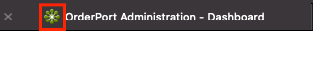
Favicons are the images presented on the webstore tab. For example, when you log in to OrderPort administration, this is our Favicon.
To add a favicon, open the webstore designer found under the services tab. Right-click on the root node of the webstore in the left panel and select Edit.
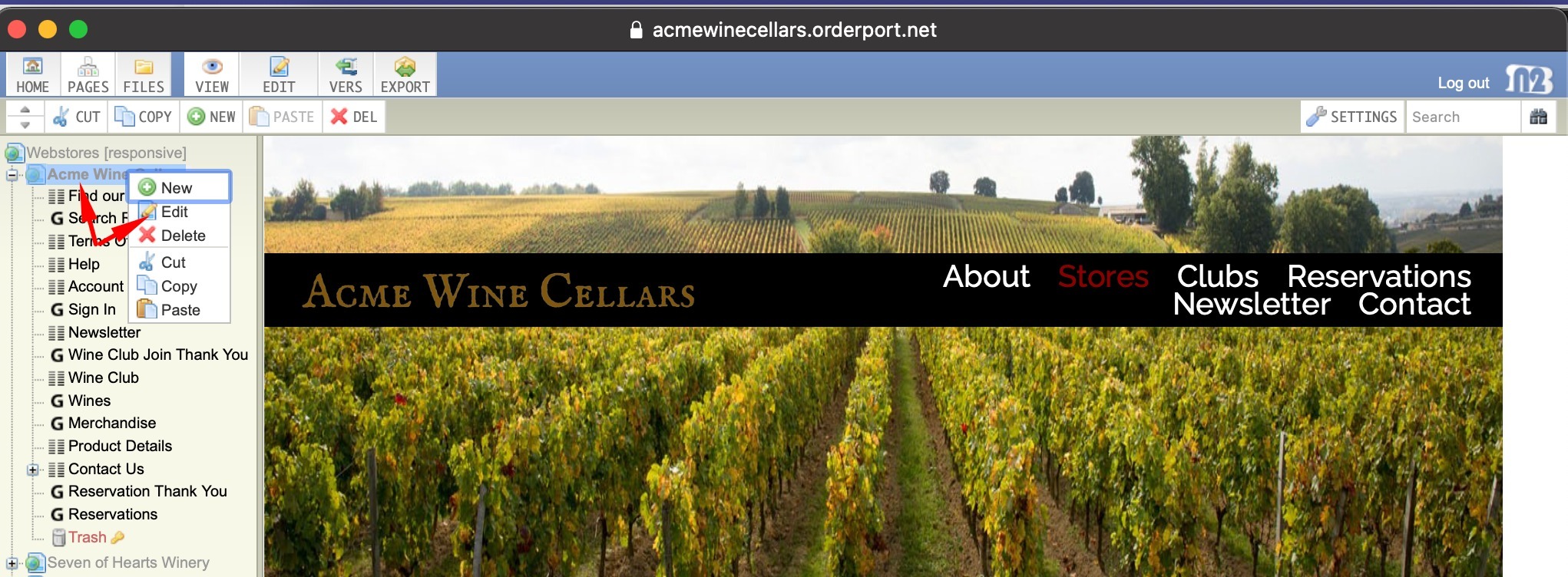
To upload a new favicon, follow these steps:
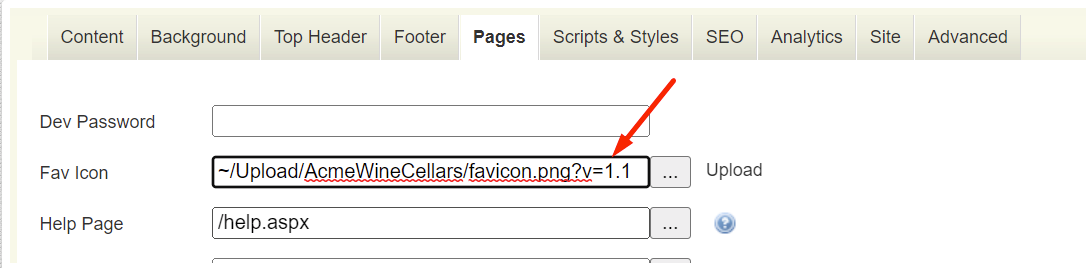
1. Navigate to the Pages tab and upload the new file. The file should ideally have one of the following names:
- favicon.ico
- favicon.png
- favicon.jpg
- favicon.gif
2. After uploading the file, remember to click "Save" and then "Publish."
Troubleshooting
If your favicon is still not visible after uploading, return to the favicon upload page and update the file name by adding "?v=1.1" at the end.
How can I change the maximum number of items per page on the webstore?
1. Go to the Admin section.
2. Click on "Site Manager."
3. When Site Manager opens, select "Wines" from the left-hand side of the page.
4. Next, click on "Edit" in the top menu.
5. Look for the tab labeled "Zones" in the top right-hand corner and select it.
6. In the Zones drop-down menu, find the category "Left Side" and select the subcategory "Left - Catalog."
7. This will load three new tabs. Select the "Settings" tab and locate the "Page Size" field.
8. Set the number of items you want to display on the page (the default is usually 10).
9. After making your changes, click "Save and Publish" at the top of the page to make your changes live.
Follow the same steps to edit the merchandise page and the events page.
Can I make a rule to put minimums on webstore orders?
We currently do not have a means of placing minimums or maximums for an online cart. It is possible to put a minimum/maximum basket quantity on individual items, but this would not be specific to the web store as POS and Admin cart sales would be subject to those rules as well.
Can I designate a particular warehouse for webstore orders?
Yes, you can have your web store orders drawn from a dedicated inventory location. You can designate this in the Catalog Manager, Catalog Settings -> "Web Store Settings" tab, then click on the drop-down menu for "Inventory Location".